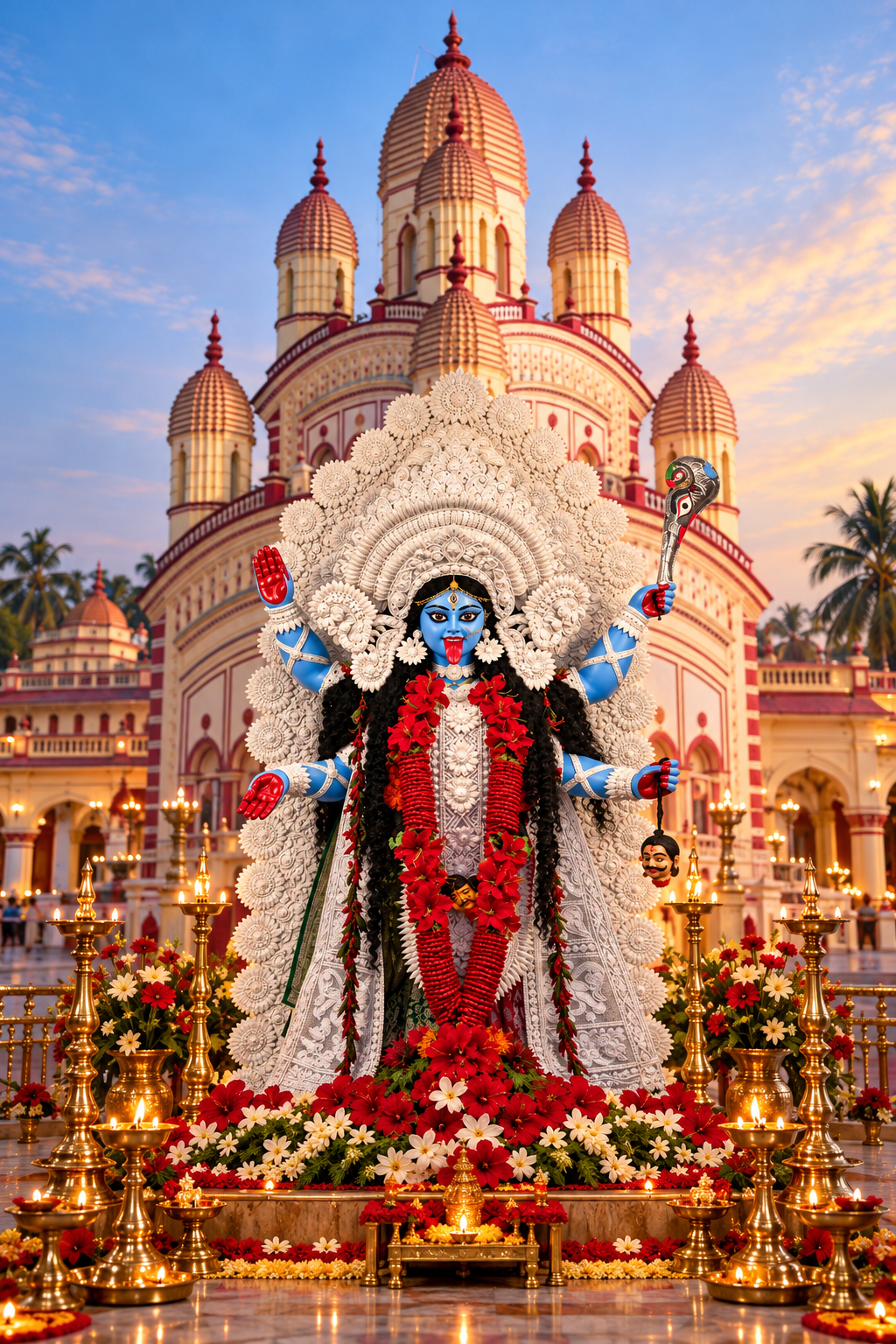
It all started with a simple thought shared casually among a few of us one fine day — “Kalipuja korle kemon hoy?”
- "একদিন হঠাৎ কয়েকজন মিলে আড্ডার ছলে ভাবনাটা এসেছিল — “কালীপুজো করলে কেমন হয়?"
What began as a passing idea soon turned into a WhatsApp group, and from there, something truly special began to take shape.
-"স্রেফ একটা ছোট্ট ভাবনা। তারপর তৈরি হল একটা WhatsApp গ্রুপ। আর সেই গ্রুপ থেকেই ধীরে ধীরে শুরু হল পথচলা।"
We started discussing everything — where we could organise the Puja, the expenses, the budget, the arrangements, and eventually, the formation of a working committee. One conversation led to another, and before we knew it, a small thought had grown into a shared community dream.
- "কোথায় পুজো হবে, কত খরচ হতে পারে, বাজেট কত রাখা যায়, কীভাবে সবকিছু আয়োজন করা হবে — একে একে শুরু হল আলোচনা। তারপর তৈরি হল আমাদের Working Committee। ছোট্ট একটা ভাবনা ধীরে ধীরে রূপ নিল একটা সম্মিলিত স্বপ্নে।"
And that is how Abarta (আবর্ত) was born — a name that represents continuation, recurrence and the flow of tradition.
- "আর সেই স্বপ্ন থেকেই জন্ম নিল “আবর্ত” — যার অর্থ ধারাবাহিকতা, পুনরাবৃত্তি এবং ঐতিহ্যের অবিরাম প্রবাহ।"
Abarta is not just about organising a Puja. It is about bringing people together, celebrating our roots, creating memories, and carrying forward a tradition that can continue year after year.
- "আবর্ত শুধু একটি পুজোর আয়োজন নয়। এটি আমাদের শিকড়ের কাছে ফিরে আসার একটি উপলক্ষ, একসঙ্গে থাকার একটি কারণ, নতুন স্মৃতি তৈরি করার একটি সুযোগ এবং আমাদের ঐতিহ্যকে আগামী প্রজন্মের কাছে এগিয়ে নিয়ে যাওয়ার একটি ছোট্ট প্রয়াস।"
A simple thought. A shared dream. A continuing tradition. This is Abarta.
- "একটি ছোট্ট ভাবনা। একটি সম্মিলিত স্বপ্ন। আর সেই স্বপ্নের অবিরাম পথচলাই — আবর্ত।"